


Online slots are one of the most popular games at any online casino. They are simple to play, come in hundreds of different themes, and do not require any special skill or strategy. Because of this, they attract a wide range of players, from complete beginners to experienced gamblers.
However, many players do not fully understand how online slots actually work. This can lead to confusion, unrealistic expectations, or falling for common myths. Understanding the basics helps you make better decisions about how you play and how you manage your money.
This guide covers everything a beginner needs to know about online slots. You will learn how the games are built, how results are decided, how casinos earn their profit, and what terms like RTP and house edge actually mean. By the end, you will have a clear and honest picture of what online slots are and how they operate.
What Online Slots Are
Online slots are digital versions of the mechanical slot machines found in land-based casinos. Instead of physical reels spinning on a motor, online slots use software to display a set of symbols on a grid. When you press the spin button, the game produces a result and displays it on screen.
Most online slots use a grid made up of reels and rows. A standard setup is five reels and three rows, giving you a 5×3 grid.
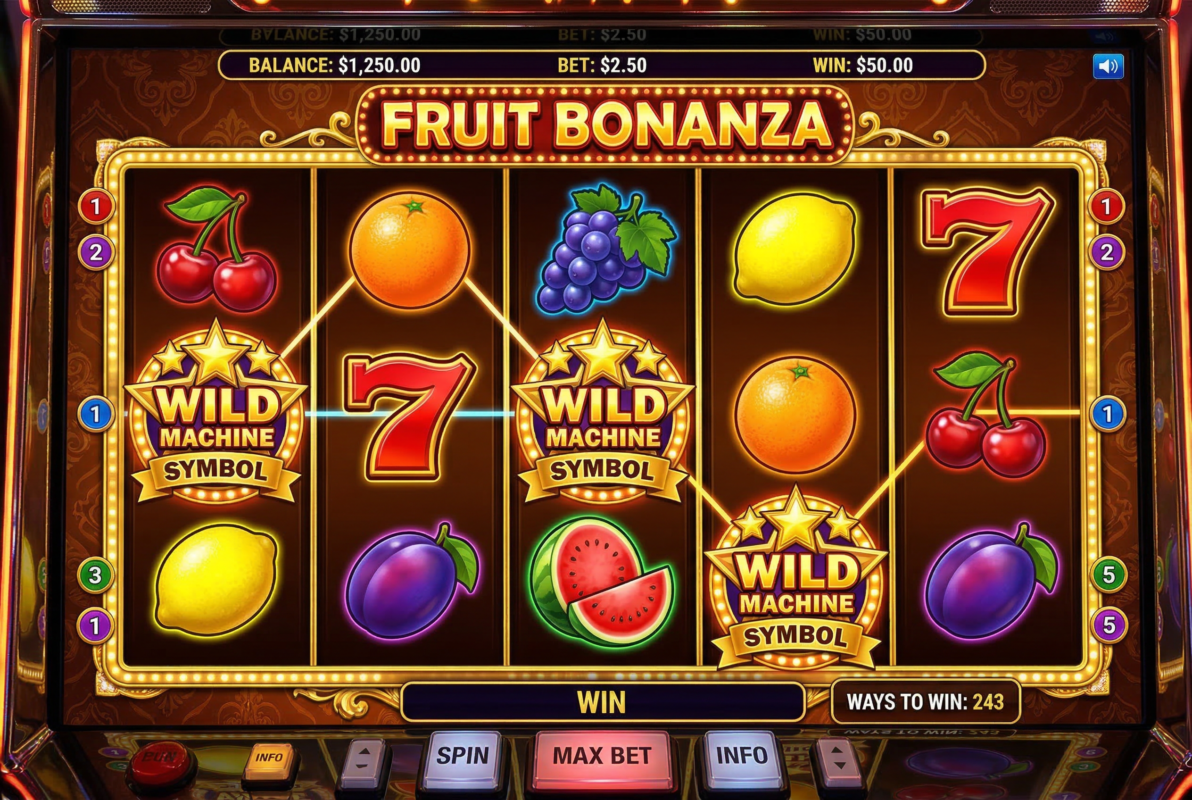
Across that grid, there are fixed lines or patterns called paylines. When matching symbols land on a payline, you win a payout based on the paytable.
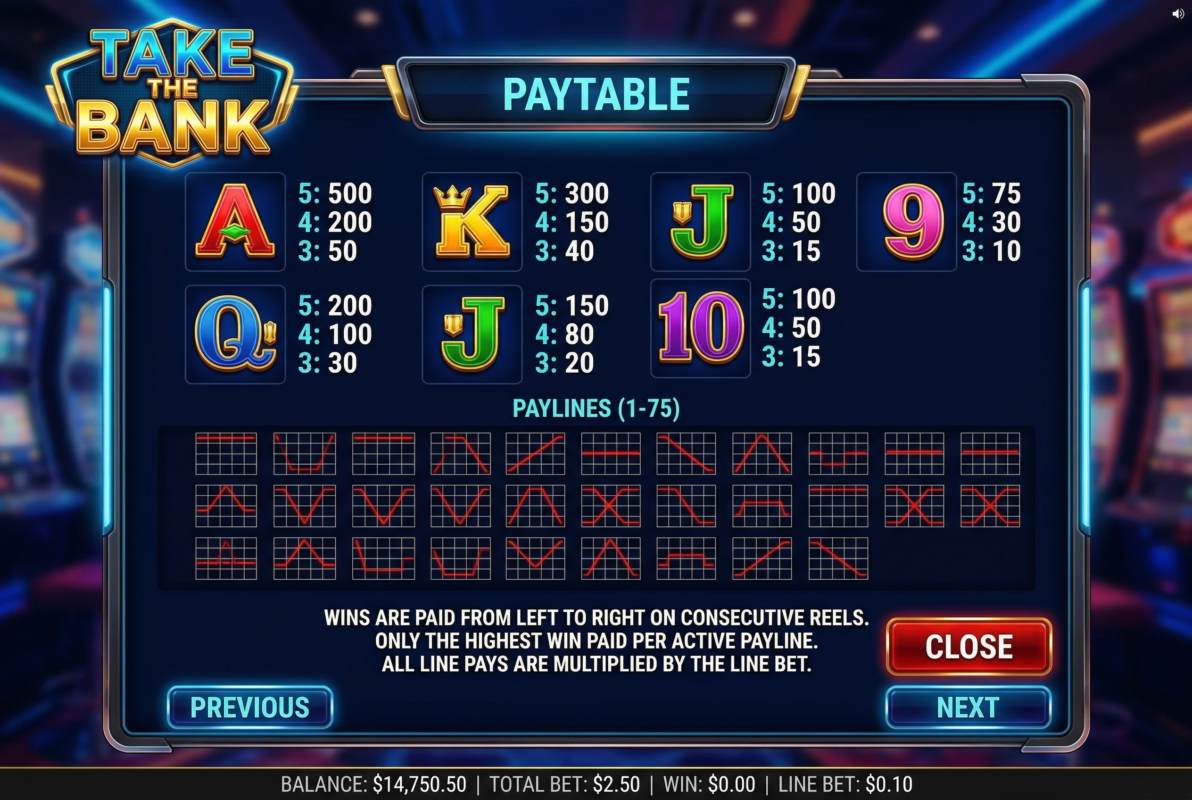
Modern online slots go well beyond the classic setup. Many include bonus rounds, free spins, multipliers, and special symbols like wilds and scatters. These features add variety to the gameplay, but the core mechanic remains the same: you spin, symbols land, and the game checks whether you have won.
RNG Explained
RNG stands for Random Number Generator. It is the technology that decides the outcome of every spin in an online slot. Without it, results could be predicted or manipulated, which would make the game unfair.
An RNG is a piece of software that produces thousands of random numbers every second, even when nobody is playing. Each number corresponds to a specific outcome on the reels. When you press spin, the game takes whatever number the RNG has reached at that exact moment and uses it to determine the result.
Online casinos use a specific type called a Pseudo-Random Number Generator, or PRNG. This uses a complex mathematical formula to generate sequences of numbers that behave like truly random results. While they are technically produced by an algorithm, the outputs are so unpredictable in practice that they meet the standards required for fair gambling. Independent testing agencies regularly audit these systems to confirm they are working correctly.
How Spins Are Generated
When you press the spin button, a sequence of events happens very quickly behind the scenes. The RNG produces a number, and the game software maps that number to a set of reel positions. Those positions determine which symbols appear on the screen when the reels stop.
Each symbol on each reel has a weighted probability. Some symbols appear more often than others, and this is built into the game’s design. High-value symbols, like those that trigger large payouts, are programmed to appear less frequently than low-value ones. This weighting is part of what determines how a slot pays out over time.
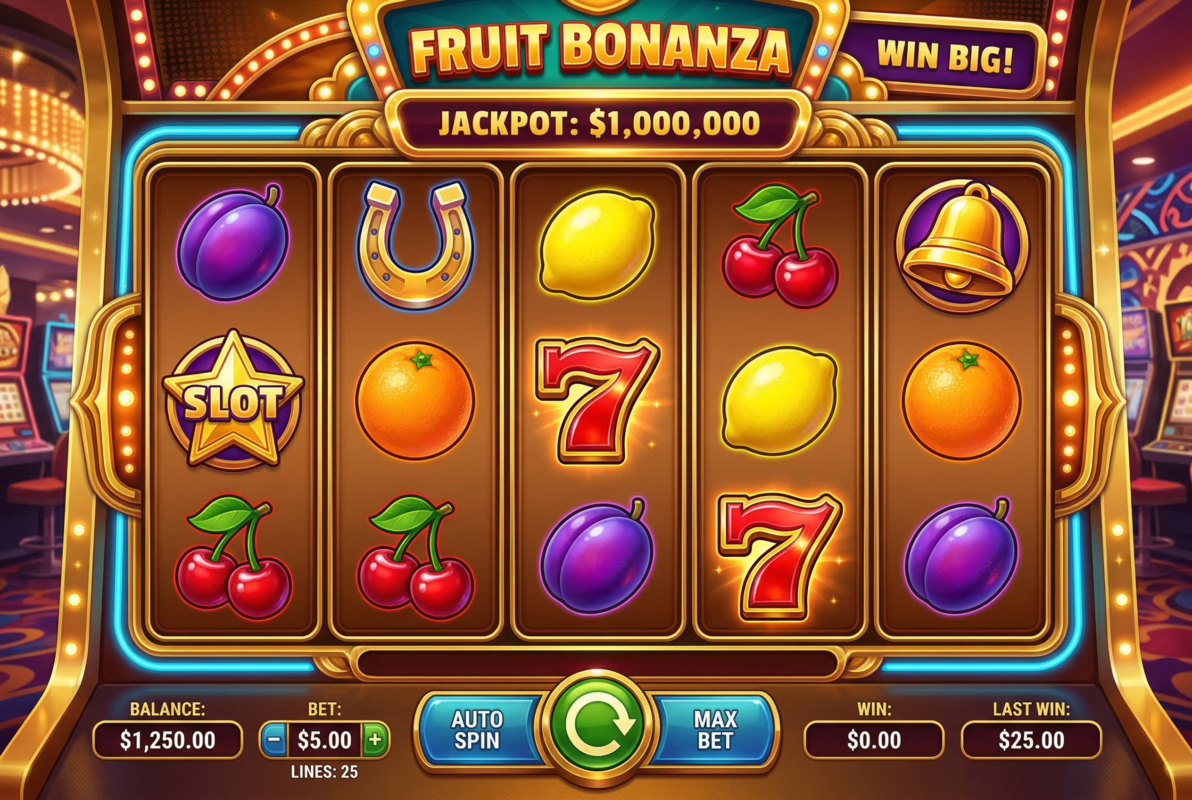
The result of each spin is decided the instant you press the button. The visual spinning of the reels is just an animation. It does not affect the outcome. The game already knows what the result will be before the reels have finished moving on your screen. This is important to understand because it means nothing about the animation or timing influences whether you win or lose.
Why Slots Are Random
Randomness in online slots means that each spin is completely independent of every other spin. The game has no memory of previous results. A losing streak does not make a win more likely, and a big payout does not mean the machine is now less likely to pay again soon.
This is different from how many players instinctively think about probability. It is natural to expect that things should balance out in the short term. But a slot machine does not work that way. The outcome of spin number 500 is no more or less influenced by spin number 499 than it is by any other spin.
True randomness also means there is no pattern to find. Some players look for hot or cold machines, or try to time their spins. None of these approaches work because they assume there is some order to the results. There is not. Each spin stands alone, and the RNG ensures that no external factor, including timing, betting amount, or player history, affects what comes next.
How Casinos Make Money
Online casinos do not need to cheat to make money from slots. The games are mathematically designed so that the casino earns a profit over time. This built-in advantage is how casinos operate as sustainable businesses.
Every slot is programmed to return a certain percentage of wagered money to players over a very large number of spins. The rest is kept by the casino. For example, if a slot is set to return 96% of all bets over time, the casino keeps 4%. That 4% is known as the house edge.
The key phrase here is “over time.” In the short term, results vary a great deal. A player can win big in one session or lose their budget quickly. But over millions of spins across all players, the casino’s percentage holds steady. The more people play, and the more spins are completed, the closer the actual results come to the programmed percentages. Individual results are random, but the overall outcome for the casino is predictable.
RTP vs House Edge
RTP stands for Return to Player. It is a percentage that tells you how much of the total money wagered on a slot is expected to be paid back to players over time. For example, a slot with an RTP of 96% will, in theory, return 96 cents for every dollar wagered across a very large sample of spins.
The house edge is the casino’s share of that same calculation. If the RTP is 96%, the house edge is 4%. These two numbers always add up to 100%. They are two ways of describing the same thing from different perspectives.
It is important to understand that RTP is a long-term average, not a guarantee. It does not mean you will get back 96% of your money in a single session. In practice, you might win more than you put in, or lose it all before the RTP shows any effect. The percentage only becomes meaningful over an enormous number of spins. When choosing a slot, a higher RTP is generally more favorable to the player, but it does not change the fact that the house always maintains an edge.
Common Myths
One of the most persistent myths is that a slot is “due” for a win after a long losing streak. This is not how slots work. Because each spin is random and independent, there is no such thing as a machine being overdue. The RNG has no awareness of previous results.
Another common belief is that betting higher increases your chances of winning. In most cases, it does not change the probability of winning on any given spin. It does affect the size of the potential payout, and some bonus features require a minimum bet, but the base odds remain the same regardless of your stake.
Some players believe that casinos can tighten or loosen a slot remotely to reduce payouts during busy periods. Licensed online casinos cannot legally do this. The RTP is built into the game software and is verified by third-party auditors. Changing it would require a software update and regulatory approval. Finally, there is no strategy, system, or betting pattern that can overcome the house edge in online slots. The games are games of chance, and no method can change that fact.
Conclusion
Online slots are straightforward once you understand the mechanics behind them. Results are decided by a Random Number Generator, every spin is independent, and the house edge ensures the casino earns a profit over time. There is no skill involved, no pattern to crack, and no strategy that changes the odds.
The best way to approach online slots is to treat them as entertainment. Set a budget before you play, understand that losing is a normal part of the experience, and never chase losses. Knowing the RTP of a slot is useful, as higher percentages are generally more player-friendly over the long run. However, no RTP guarantees short-term results.
If you understand these fundamentals, you are better equipped to make informed decisions and enjoy the games for what they are.
FAQ
Q: Can online casinos change a slot’s RTP without telling players?
Licensed casinos operating under regulatory oversight cannot adjust a slot’s RTP on the fly. The payout percentage is set by the game developer and independently verified. Any changes would require a formal software update and approval from the relevant gambling authority.
Q: Does the size of my bet affect my chances of winning?
In most online slots, your bet size does not change the probability of landing a winning combination. It does affect the value of any payout you receive, since wins are usually calculated as a multiple of your stake. Some bonus features may require a minimum bet to activate.
Q: Is there any way to improve my odds on an online slot?
No strategy can change the mathematical odds of an online slot. Choosing games with a higher RTP is the closest thing to a practical advantage, as those games return more to players over time. Beyond that, managing your budget carefully is the most useful thing you can do.
Q: What does it mean when a slot has high or low volatility?
Volatility, sometimes called variance, describes how a slot pays out. A high volatility slot pays out less often but tends to offer larger wins when it does. A low volatility slot pays out more frequently but usually in smaller amounts. This does not change the overall RTP, but it does affect how your session feels and how quickly your bankroll can move up or down.
